
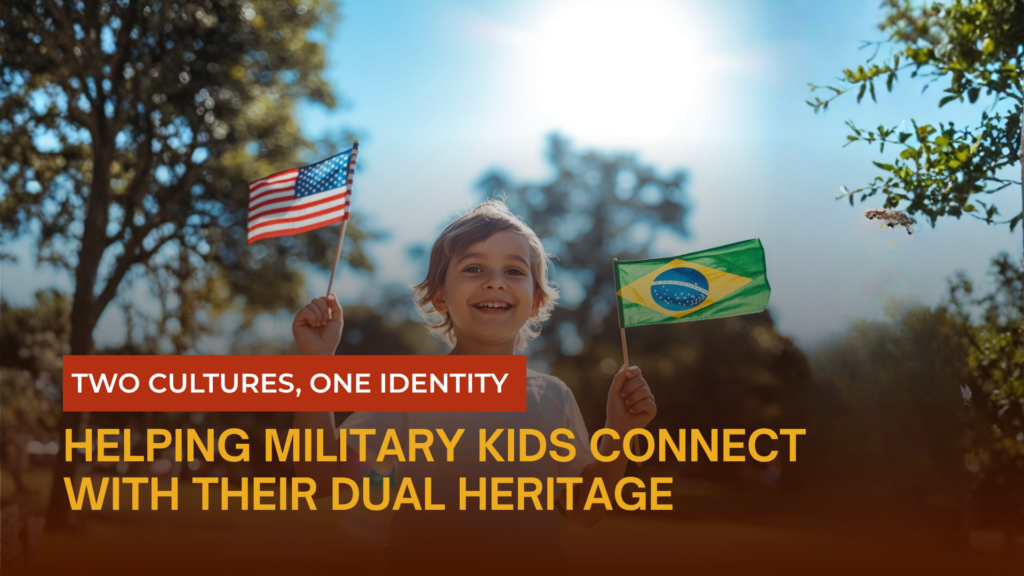
What does it mean to grow up between two cultures? And how can we, as foreign-born military spouses, help our children embrace both?
Military kids often have a unique upbringing. Frequent moves and diverse communities shape their experiences. This lifestyle can build adaptability and global awareness, but it can also leave children feeling like they don’t have clear roots or a true sense of “home.”
So let’s explore how we can support our children in understanding, appreciating, and integrating their dual heritage. Discover how our community is empowering their children to see their multicultural experience not as a challenge – but as a powerful advantage. Even if you don’t have children, these ideas can help you connect with your own dual identity.
Feed their interest with food!
Food is one of the easiest ways to connect kids to their heritage. It brings culture to life through taste, smell, and shared moments. It makes identity something they can feel, not just understand.. Here are some meaningful, practical ideas:
- Create “Heritage Nights” – Set aside one night a week or month to cook dishes from each culture your family represents. Let your child help choose recipes, prepare ingredients, or even plan the menu to build curiosity and ownership.
- Share the Stories Behind the Food – Every dish has a story – where it comes from, when it’s eaten, and why it matters. Talk about family traditions, holidays, or memories connected to certain meals. This turns food into a bridge between generations and places.
- Build a Personal Recipe Book – Have your child collect favorite recipes from both cultures into a scrapbook. They can add drawings, photos, or notes about what they thought of each dish and memories connected to it.
- Encourage Kids to Share – Let them bring a dish to school events or make a favorite meal when their friends come to visit. Teaching others boosts confidence and pride in their background.
Keep It Consistent, Not Perfect – You don’t have to cook elaborate meals all the time. Even small, regular touches like a traditional snack or weekend breakfast can reinforce cultural connection over time. Food creates routine, comfort, and identity—all especially important for military kids. Done intentionally, it becomes more than nourishment; it becomes a daily reminder of where they come from and how both cultures belong together.
“For me, Christmas is a really special time and there are lots of British traditions and foods I’ve tried to introduce to my kids. For example, rather than milk and cookies, Santa gets a mince pie on Christmas Eve! And this year I taught myself to make them from scratch. I’ve really enjoyed teaching myself how to make traditional Christmas recipes and my daughter loves being my little helper in the kitchen, especially when we are making some kind of sweet treat.” – Ellen
Celebrate as many Holidays as you can!
Incorporating traditional holidays into family life can be a powerful way to help military kids embrace their dual heritage. Holidays are more than just celebrations. They carry meaning, history, and a sense of belonging. All of which are especially important for children growing up with frequent change.
- Fuze your holidays – Choose a celebration that’s widely recognized—like Christmas—and blend traditions from your home culture with American ones. Start small: pick one meaningful tradition you grew up with and share it with your family. Then build on it each year, gradually creating a celebration that reflects both worlds. Over time, this helps reinforce that their identity doesn’t have to be split but something uniquely your own.
- Celebrate with other families – Connect with families who share a similar heritage and celebrate cultural holidays together. If you can’t find other families that reflect your, find others with a dual heritage and share in everyone’s celebrations! Whether it’s Chinese New Year or Diwali, gathering as a community creates a meaningful space to share traditions and learn. It’s also a great opportunity for your child to explore different cultures and meet other children who have family spread across the world.
- Create Lasting Memories – The rituals around holidays, decorating, cooking, storytelling, become core childhood memories. Whatever you decide to include and share with your kids, keep it consistent each year. These experiences stay with kids and often shape how they view their heritage well into adulthood.
“For me food, family and clothing have been a big part of keeping my heritage alive with them. We mainly eat Kenyan food, at least 5 times a week, I make sure they wear something Kenyan twice a week and we call and keep in touch with family over the weekend. There are some special holidays we do observe even if they are are not observed here, they don’t go to school those days and I teach them what those days mean.” – Lydiah
Learn the Language
Helping military kids connect with your language is one of the most meaningful ways to strengthen their bond with their heritage. Language carries identity, emotion, humor, and history. However it can become difficult and frustrating when there is too much pressure to succeed. Here are some practical, realistic ideas:
- Make It Part of Everyday Life – Use your language during daily routines – mealtimes, getting ready for school, or bedtime. Even simple phrases repeated often help kids absorb vocabulary without pressure. If full conversations feel overwhelming, introduce one word or phrase at a time. Label objects around the house, practice greetings, or use common expressions daily.
- Share your childhood – Share your favourite songs, cartoons, and movies in your language to make learning fun and engaging. Kids often pick up pronunciation and phrases quickly through repetition and entertainment. Children’s books in your language are a great entry point. Even if your child doesn’t understand everything, hearing the rhythm and sounds builds familiarity and comfort.
- Talk with Family Members – Encourage conversations with grandparents or relatives who speak the language—whether in person or via video calls. Real-life interaction gives language purpose.
For military kids especially, language can become a powerful anchor. Its a way to stay connected to family roots no matter where they are in the world. The key is to keep it consistent, meaningful, and enjoyable so it feels like a natural part of who they are.
“It’s a beautiful journey for sure but the challenge has been to get them to speak my language because we have both Swahili and Luo and dominant languages and it is difficult to teach one and not the other. But what I’ve realized is how easily they can speak in my accent, and switch to the American accent when with peers, sometimes it’s hilarious!” – Lydiah
Discover your Ancestry together
Military children can sometimes feel like they don’t fully belong anywhere. Discovering family roots gives them a deeper sense of connection and belonging. Understanding their ancestry helps children see that identity is layered and evolving. They’re not just from one place – they’re part of a bigger, more complex story that includes multiple cultures, experiences, and histories.
- Strengthen Family Bonds – Exploring ancestry can be something you do together – talking to relatives, looking at old photos, or building a family tree. These shared activities create connections and open up conversations that might not happen otherwise.
- Turn It Into a Living Project – Create a family tree, scrapbook, or digital timeline together. Kids can add photos, stories, maps, and even recipes tied to their ancestry. This makes the learning process interactive and ongoing.
- Connect Past and Present – If possible, link ancestry to real places—whether through maps, travel, or virtual exploration. Seeing where ancestors lived helps children visualize their roots in a concrete way.
Researching ancestry gives military kids something steady in a life that often changes. It helps them understand that no matter where they go, they carry a rich history with them. But you don’t need to uncover everything at once. Start small—one story, one branch of the family, one tradition. Let curiosity lead the way.
“I’ve done a lot of work on our family tree, with the hope that my future children can inherit it. They’ll be able to see that their dad’s ancestors were cowboys in the wild west and that their mam’s ancestors were miners in the cold of northeast England, and where we came from before that.” – Kizzie
Take the Trip
Visiting places connected to your family’s heritage can have a deep and lasting impact on military kids. It turns identity from something they hear about into something they can experience, making culture real, memorable, and meaningful.
- Make Culture Tangible – Walking through a country, or neighborhood tied to their heritage helps kids see, hear, and feel what life is like there. The language, food, architecture, and daily routines bring their background to life in a way no book or story can. Seeing their heritage up close can spark questions, interest, and pride. Kids are more likely to want to learn, share, and engage with their culture after experiencing it firsthand.
- Strengthen Emotional Connection – Being physically present in a place where their family comes from can create a strong emotional bond. It shifts their perspective from “this is where my parents are from” to “this is part of me.” Talk about the significance of places you visit—family homes, schools, neighborhoods, or cultural sites. Sharing stories while you’re there adds depth to the experience.
- Connect with Extended Family – Spending time with relatives—grandparents, cousins, or extended family helps deepen relationships and gives kids a clearer sense of their place within a wider family network. As parents, there truly is nothing more special than seeing your kids make lasting memories in the exact same places you did as a child.
Even if visits are short or infrequent, they can inspire ways to bring elements of that culture back home—through food, routines, or celebrations. Not every visit will feel magical, and that’s okay. What matters is exposure and connection over time, not a perfect experience.
For military kids, visiting heritage locations can be grounding in a life that often feels transient. It gives them a clearer sense of identity and belonging—helping them see that no matter where they’re stationed, they carry a piece of “home” with them.
“I try to go home yearly and she tries all the food and do all the things her cousins do together so she experiences life as I know it there and not only as a tourist.” – Elsa
Final Thoughts
“Older immigrant generations tend to focus on full assimilation in their new home. Instead of that approach, I raise the kids (still very young) to embrace both worlds – honoring not just their current home, but also appreciating their roots… Because they look different, I foresee certain situations that they might experience and we talk about it so they have an idea on what to say or how to react. I keep on repeating it until I finally just made a song for my kids and they listen to it a lot. Part of the lyrics is me telling them that their skin color may be different, but they have empathy, joy, faith, wisdom, they have grace, a sacred right to peace and to belong. I grew up with 2 cultures, too, and I only appreciated it when I became an adult. I hope my kids appreciate it early on in their lives.” – Mari
Living with a dual identity isn’t always easy. It can feel like being pulled in two directions yet never fully belonging to one side or the other. But working through that tension matters, because it shows our children that identity doesn’t have to be divided or “perfect” to be meaningful.
By embracing both cultures we give them permission to do the same: to feel proud, grounded, and whole in who they are. It may feel overwhelming at times, but even small, intentional steps can make a lasting difference. Whether you have children or not, these practices help you feel founded and keep your heritage alive while also making space to fully engage with American military life.