Sit With A Spouse: Caroline Torres Marin, FMSN’s IT/Security Manager
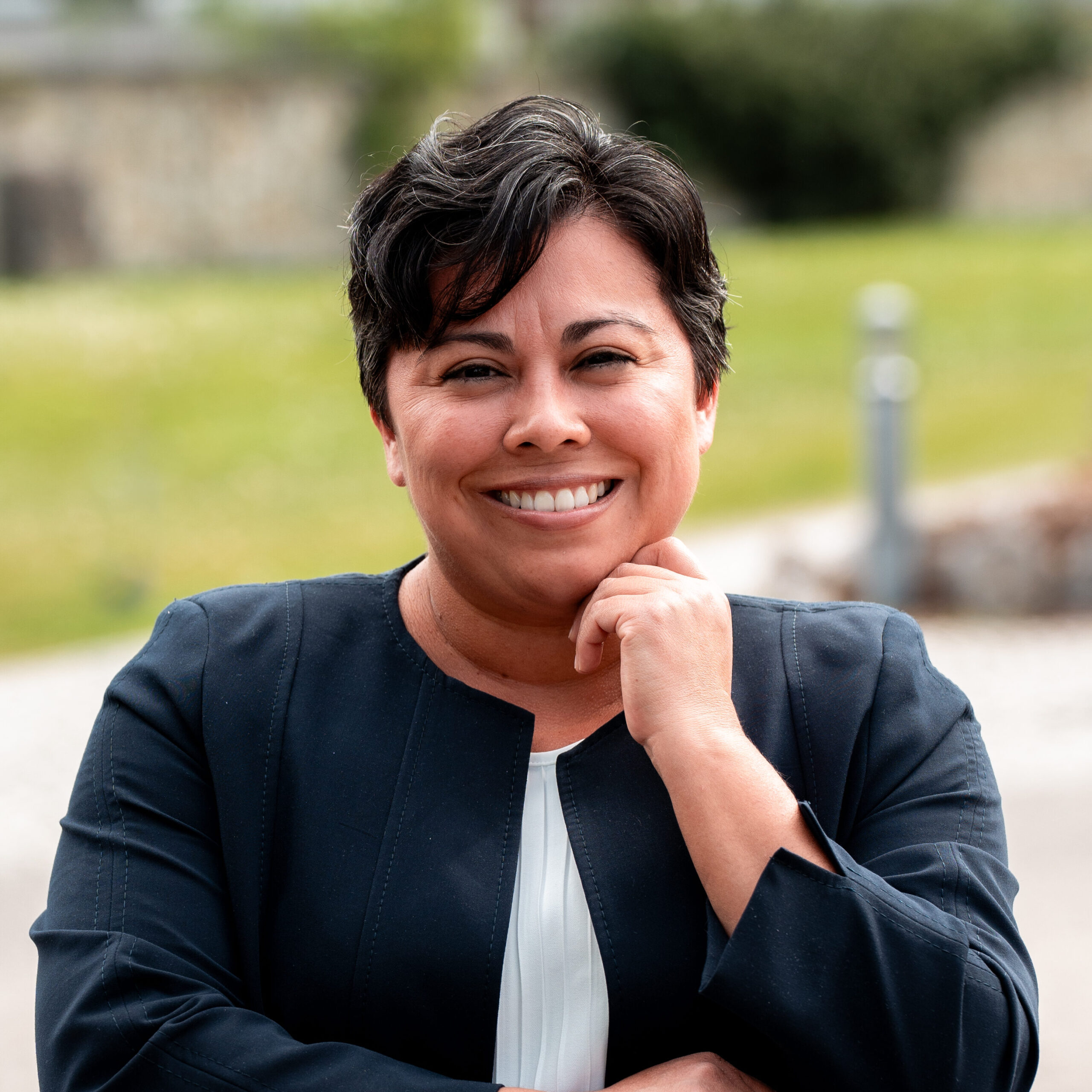
This week I sat down with Caroline, our wonderful IT Security Manager at FMSN, to discuss military life, the importance of education and how volunteering with FMSN has impacted her career goals.
Originally from Costa Rica, Caroline has been a Navy spouse for 10 years, and recently PCS’d to Pensacola, Florida.
Tell me a bit about your life before becoming a military spouse?
Oh!! Ha ha ha!! It is a long story. I am the daughter of a lawyer and an elementary school teacher. Science has always been my passion, and teaching came naturally to me. On top of that, I am a firm believer that we must give the best education to young people because they will be the future of our society. Therefore, we must do our best to leave this world a better place. So, I studied to become a science teacher with a specialization in Biology, Chemistry, and Physics. I worked 15 years with middle school, high school, and college students. It was a wonderful time, and although I know I was not perfect, I hope to have made a difference in my students’ lives. I am still in contact with some of them, and I feel proud that they chose science careers. Aside from teaching, I engaged in extra activities such as birdwatching, stargazing, and traveling across my country to enjoy the diversity of Costa Rica’s ecosystems and fauna. So, as you can see, I had a lively, active, and fulfilling life before becoming a military spouse.
Did becoming a military spouse change you in any way?
Yes! How could it not? Military life has reshaped me in ways I never anticipated.
I left behind my family, my friends, my career, and the life I knew to begin again alongside my husband. What followed was not just relocation, but reinvention. Through constant moves and uncertainty, I learned resilience. Moving every three years taught me to live with less and to value experiences over possessions. The unpredictability of military life taught me to live fully in the present, because circumstances can change in an instant. I also changed careers – something I might never have done otherwise. That transition required courage and adaptability, and it expanded my sense of identity beyond what I originally imagined for myself. Most importantly, I learned that family support transcends distance. Military life has made me stronger, more flexible, and more intentional about who I am and what I value.
Tell me about your role with FMSN? What do you enjoy most about volunteering?
As the IT Security Manager for FMSN, what I enjoy most is knowing that my work directly protects the integrity and privacy of the spouses we serve and the team supporting them. Many of our members trust us with sensitive personal information, and safeguarding that data is both a responsibility and a privilege.
I also enjoy troubleshooting and strengthening our systems. Every technical challenge is an opportunity to research, learn, and apply what I’ve studied in my cybersecurity certifications. Volunteering allows me to continuously refine my skills while contributing meaningfully to an organization that supports foreign-born military spouses. Additionally, I really like that having an organizational email lets me sign up for cybersecurity conferences. Some of these events only allow you to sign up if you have an organizational email, and in a rapidly evolving field, that continuous learning directly benefits the network and the community we serve.
So you began as a science teacher and are now pursuing a career in IT – That’s quite a big change! What made you decide to make the switch?
Well really it’s not such a big change! When I was in Costa Rica, I was and I still am, (I think!) a very clever person. My parents didn’t have resources to pay for a degree so I got a full scholarship to study whatever I wanted and decided to study computer networks. However my true passion was to become a science teacher. And I remember in the beginning, I didn’t want to study IT. But my dad was the one who convinced me, he told me, you never know how this degree will help in the future. You may not work in that area, but you can and should take advantage of this opportunity.
I did end up teaching science in Costa Rica as we already discussed, yet when I came to the U.S.,I realized, oh no, I cannot teach here. It is too much and too different. That’s when I realized that my dad was right. And thought, okay, I think it is time to pursue a career in IT! So I asked for an accreditation of my degree and that first degree is what allowed me to sign up for further study in the US as I already had some knowledge of the area.

I believe you used the MyCAA scholarship program to pursue further education in the US. What drew you to that program and how did it help you reach your goals?
While I was working with a SECO career coach, and he told me I qualified for the scholarship because its eligibility had expanded. I remember that when I came to the US, the scholarship didn’t apply to me because of my husband’s rank. So, when my coach told me that due to changes I qualified, I took advantage of the opportunity. I got my certification while I was overseas, and now that I am back in the US, I will be able to see whether these certifications will help me reach my goal of getting a job.
How has it helped me to reach my goals? That is still a work in progress. I got my certification while I was overseas, and now that I am back in the US, I will be able to see whether these certifications will help me reach my goal of getting a job.
Could you tell me a bit more about the MySECO program and how it supported you?
While we were stationed overseas in Spain I wasn’t able to find a job. I was very discouraged. I graduated before going to Spain, and I was very happy – confident in my new degree. But I could not find a job. The application processes were very fast and complicated and I kept missing opportunities or getting turned away. So I decided, okay, I need to do something.
I found MSAM first, the Military Spouse Advocacy Network. I volunteered with them as a mentor to other spouses. Through this opportunity I finally realized the number of resources available to us, the spouses. So that’s when I discovered and decided to contact the SECO career coach. I explained to them my position; I have a new degree, I cannot work right now in Rota, Spain. What can I do in the meantime to prepare to go back to the U.S.? My coach helped me first to realize what kind of job positions I would like to do, because the field of computer networks and cybersecurity is huge. There are many positions that you could do. At this point I needed to do a little soul searching to see which positions would interest me most. I took personality and interest tests to see what best aligned with me and looked inward to decide what it is that I see myself doing in the future. So after that he helped me to do some research about jobs in the U.S., how to use different resources available to find the job, the salary, the requirements they are asking for, and advised me on the MyCAA scholarship program. It really helped me prepare for our move back to the states and hopefully will make the process of finding a job much smoother now we are back.
What advice would you give to a fellow foreign-born spouse who isn’t adapting to life in the US as easily as they anticipated?
Mmmm… this is a tough one because every person is so different, and adapting involves many areas. Based on my experience, I would say that you must go at your own pace. Avoid trying to copy what other spouses have done. Take your time doing some soul-searching with a career coach or life coach, and make a plan that reflects your path. Be kind to yourself, and engage in hobbies, strategic volunteering, or any other activity that might help you find good friends, offer personal rewards, and serve as an outlet for stress and anxiety. Lastly, I would say it is essential to spend some time researching the resources available to you as a military spouse. We live in a time where access to knowledge is widely available; for instance, use ChatGPT or any other AI tool to help you do some research. Once you know what is available, you can start planning to reach your goals.

Feeling inspired by Caroline’s story?
- Join us! become a member of our growing team of volunteers and start making a real difference in the lives of fellow foreign-born spouses.
- Contact us! Reach out to our Education and Career Coordinators to learn more about the opportunities Caroline mentioned. We can’t wait to help you take the next steps in your journey.
- Share your story! Everyone of us has a story to share. If you’d like to share yours in the hope it may inspire fellow spouses, or make them feel less alone, reach out to us today.
- We need your feedback! If sharing your story that feels a little intimidating, we are also looking for feedback on how FMSN has supported or impacted you! Simply fill out the form and let us know how we are doing.